


Achieving Precision and Accuracy on the Wood Lathe
Working on a wood lathe demands more than just turning a piece of wood. It requires precision and accuracy to create smooth, balanced, and well-shaped projects. Whether you are crafting bowls, spindles, or intricate designs, the quality of your work depends heavily on how accurately you control the lathe and your tools.
Turning wood hats
In order to turn a wearable wood hat that is comfortable, it must be light; I prefer 10 ounces or less. The process starts with a large green (fresh cut) wood blank about 18" in diameter by 8" thick and with well-balanced grain. This means that the pith of the tree is centered and the growth rings are balanced out to the sides. Starting with a good blank and sharp tools will help ensure the hat turns and dries with well-balanced curves and shape.
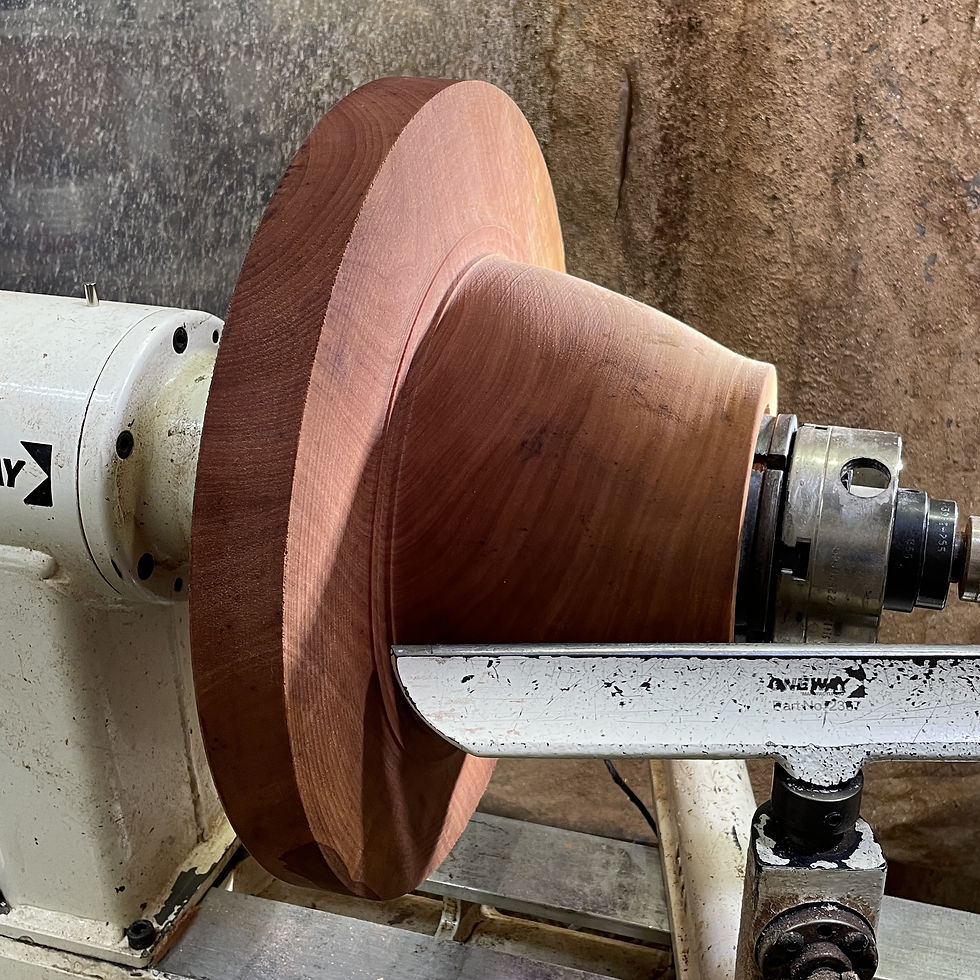
I use various methods to achieve a thin, even brim: light, sound, various calipers, and an electronic device that measures magnetism. In general wood turning, a 16th of an inch is not critical or sometimes noticeable, but when you are turning thin, it's a whole new ball game. In order to be light and wearable, the final thickness is key. .0760 inches on a digital caliper is 76 thousandths of an inch or 1.93 mm in metric. When I get close to the desired thickness, the wood becomes transparent to light, and the pitch of the tool cut increases. While these are very good indicators, they can be affected by wood density and type, and experience with the sound of the cut. Fishing comes to mind, as the size of the catch is always exaggerated as bigger, and while trying to turn thin, it's always thicker than I think. Calipers used in turning are like scales used to weigh fish; when used correctly, they provide an accurate representation.
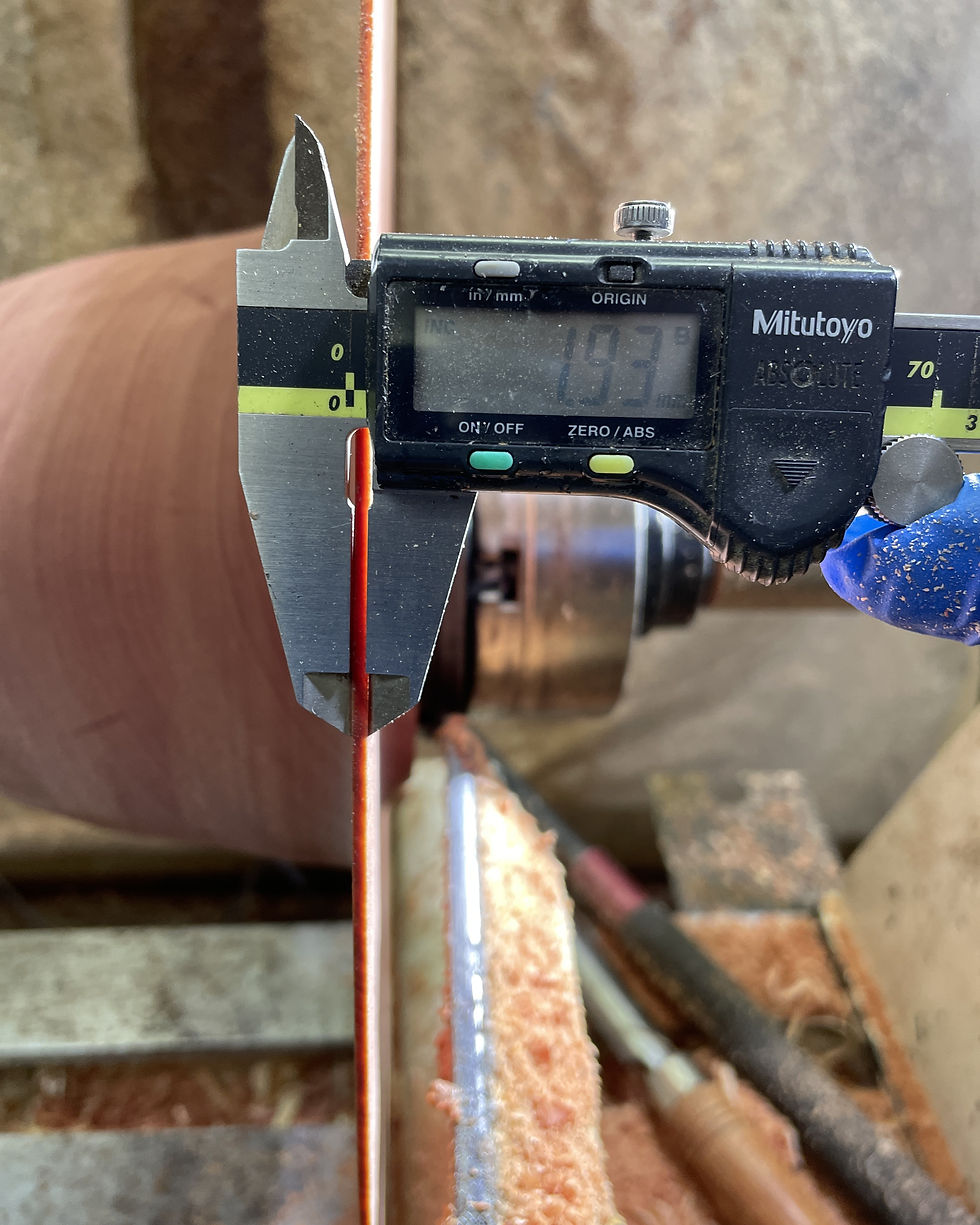

using light to help gage thickness using a home made device to measure thickness using magnetism, the voltage reading on the meter is a Finished turning and in the drying jig After 3 days in the drying jig the brim is nicely getting wavey Ladies Robin Egg Blue raffia Hat, Maple veneer band with Arbutus Burl flower.
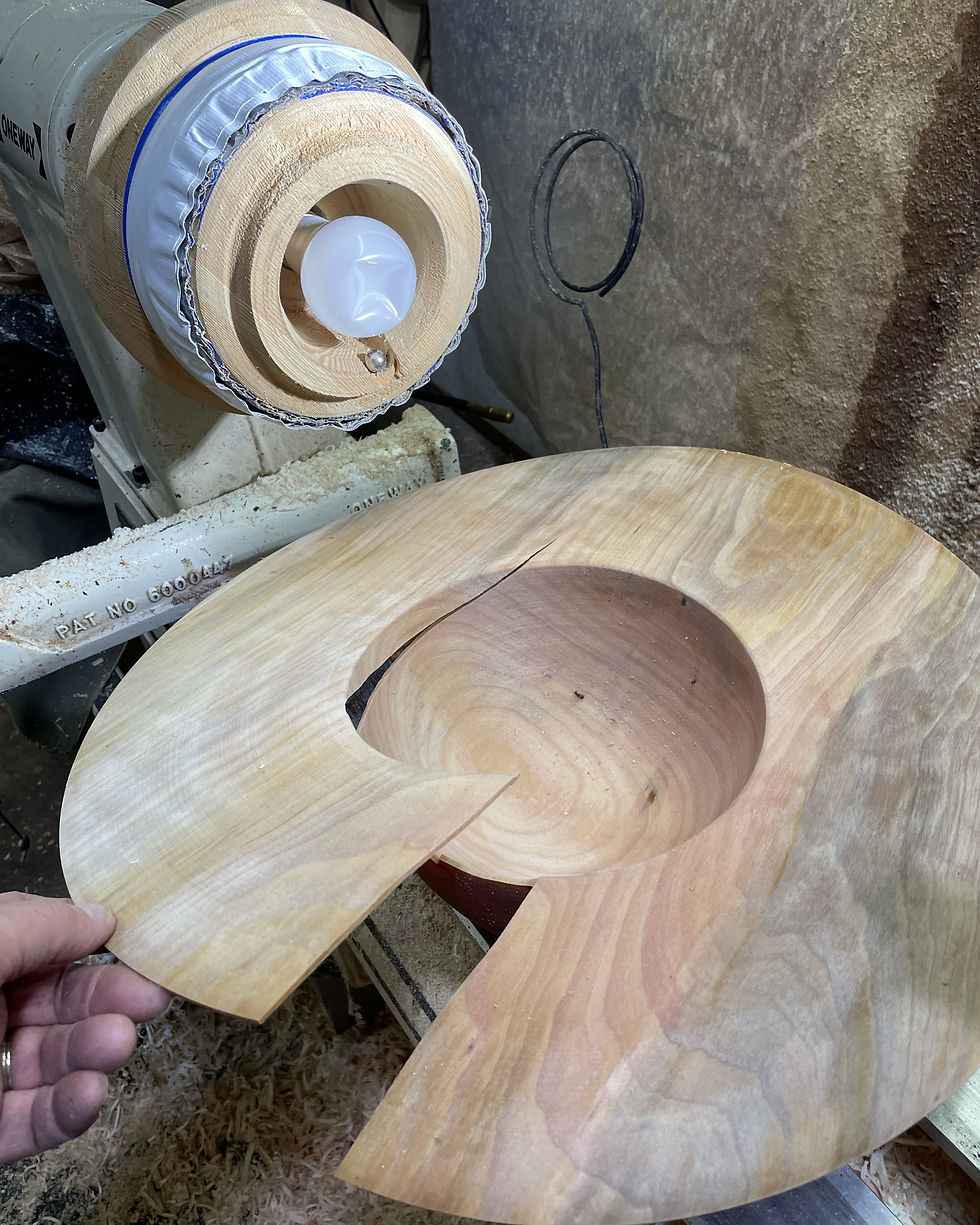
This hat was originally rough-turned to be used as a cowboy hat, but after accidentally breaking the brim on a previous ladies' Raffia hat, I changed this one to a raffia-style ladies' hat for a commission piece. The hat is Arbutus and came from an uprooted tree from a winter windstorm. Once the hat has dried to shape, I will use a homemade branding tool to burn patterns into the wood to create a raffia appearance. The end result will be similar to the blue hat in the above photo.


Comments